Let's talk.
Tell us a little about your project and we'll get back to you within one business day.
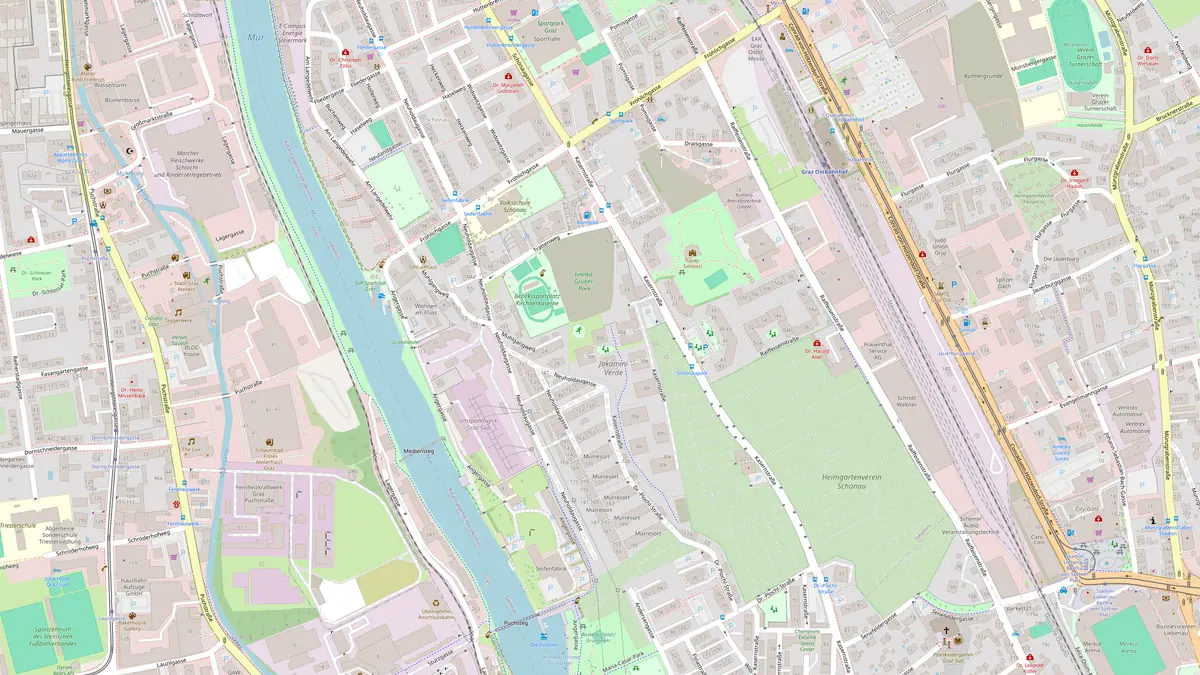
MASHED Software Solutions GmbH Kasernstraße 30b / Top 104 8010 Graz, Austria
UNICORN Startup & Innovation Hub Schubertstraße 6a 8010 Graz, Austria
Drop us a line
What are you
working on?
Questions
Frequently asked questions
A few we hear most often. Don't see yours? Just write to us.
- Where is Mashed Lab based?
- Our headquarters are at Kasernstraße 30b in Graz, Austria, and we also work from our office at the UNICORN Startup & Innovation Hub (Schubertstraße 6a, Graz). We work on-site with regional clients across Styria and remotely with clients across Austria, Germany, Switzerland, and beyond.
- Do you work with clients outside Austria?
- Yes. Most of our engagements happen across the DACH region, and we regularly work with English-speaking clients across Europe. We deliver in both English and German.
- What does a typical engagement look like?
- Most projects start with a discovery and strategy phase (2–4 weeks), then move into design and engineering sprints of 4–12 weeks. Long-term partnerships with ongoing strategic advisory are also common.
- How quickly can you start?
- New engagements typically begin within 2–4 weeks of the first conversation. For urgent work we can sometimes accommodate a faster start — get in touch and we will tell you honestly what is possible.
- Which industries do you work with?
- We have deep experience in industrial manufacturing, sports and outdoor retail, e-commerce, and B2B software — but we are happy to work with any organisation that wants to build serious digital product.
- Do you build with AI? And does that make my project cheaper?
- Yes, deeply — across our own tooling, our coding workflows, and the products we ship for clients. What it actually changes for you isn't the price; it's where the time goes. Less of it is spent on mechanical typing, more on architecture, judgment calls, and review. That tends to make the product better. Sometimes faster too — but that's the side effect, not the headline.
- What happens after launch — do you maintain the product?
- Most products only get interesting after the first deploy — that's when real users start finding the edges. We stay on through that phase by default: maintenance, iteration, and the strategic conversations about what's worth building next. That ongoing partnership is our default mode, not an add-on. We're not the kind of studio that ships and disappears.
- Are there projects you say no to?
- Yes. Mostly when we can't see a way to do the work to the standard we'd want our name on, or when the scope is shaped around someone else's plan we don't believe in. We'd rather say no early than build the wrong thing well. Honesty about fit saves both sides months.
- Do you build online shops and e-commerce platforms?
- Yes — e-commerce is one of our core fields. We've relaunched commerce platforms for brands like Nuki and Blue Tomato, work with headless commerce stacks like Crystallize and Shopify, and build the surrounding machinery too: product data, payments, ERP integrations, and the warehouse layer (we built our own WMS, Vando). From shop frontend to fulfilment, it's one connected system.
- Who owns the code — and what if we part ways?
- You do. Everything we build for you — code, designs, infrastructure configuration, documentation — belongs to you and lives in repositories you control. We deliberately build on open, widely-used technology so any competent team could take over tomorrow. Lock-in is a business model; it just isn't ours. Clients stay because the work is good, not because leaving is hard.
- What technologies do you build with?
- TypeScript and React — with Astro and Next.js — on the frontend; Node, Python, or Go on the backend, with Postgres as the default store; React Native or Flutter for mobile; headless CMSs like Storyblok, Sanity, and Contentful; commerce stacks like Shopify and Crystallize. But we choose per project, not out of habit: proven, boring technology where it counts, newer tools only where they genuinely earn their place.
- How do you make sure the quality holds?
- With process, not promises. Automated tests and CI/CD pipelines are standard on every project, every change is reviewed before it ships, and accessibility (WCAG 2.2 AA) and performance are built into the pipeline rather than retrofitted before launch. After deploy, monitoring and observability show us how the product actually behaves — because quality is something you keep, not something you hand over.